 Industrial Cleaning & Drying Systems


Comparison guide
One-tank vs two-tank cleaning machine for flat sheet production
Choose one tank when residue is manageable and sheets stay clean and dry throughout production. Choose two tanks when later sheets show carryover, water marks, or unstable surface quality.
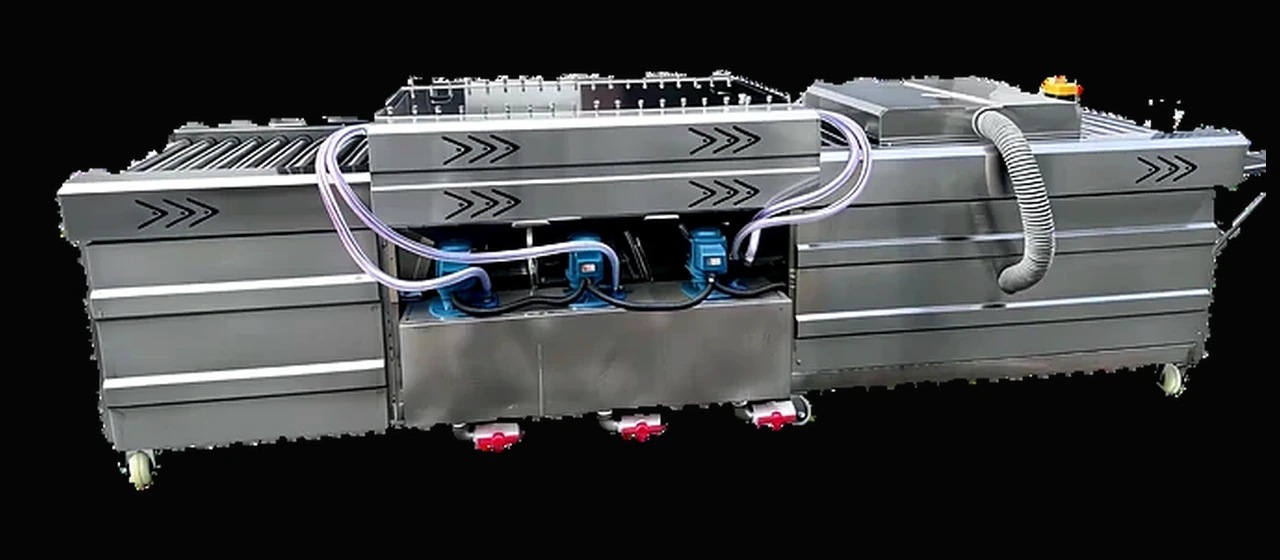
Key differences
Choose by sheet cleanliness across production
Compare the residue, rinsing result, water marks, drying quality, and required finish. Tank count is only useful when it solves a real production issue.
One-tank machine
Single-stage flat-sheet washing and drying
Best for flat sheets with manageable residue when one washing stage and drying provide a stable result before coating, storage, or packing.
A good choice when
- Aluminum, stainless, or similar flat sheets with manageable oil, dust, or light mixed residue
- Projects where one-pass washing and drying meet the coating, storage, or packing requirement
- Sheet families that feed steadily, drain cleanly, and do not show worsening marks or residue carryover later in the run
Please check first if
- Choose another option if later sheets pick up carryover or drying marks
- Check carefully when lamination, finish quality, or exposed surfaces have stricter requirements
- Review residue load and both sheet faces, not only sheet width
Two-tank machine
Separated wash and rinse for more stable flat-sheet output
Best when one-stage washing loses consistency over time, residue or water marks reach later sheets, or a cleaner final rinse is needed before coating, lamination, or packing.
A good choice when
- Flat-sheet lines where oil, dust, or mixed residue make one-stage washing lose consistency too quickly
- Projects where sheet finish, lamination prep, or final packing quality needs cleaner rinse separation before drying
- Projects that need consistent surface quality across longer production runs
Please check first if
- Confirm that rinse water degradation or oil carryover is the actual bottleneck before specifying a dual-tank line
- Check finish sensitivity, water quality, and drying because another tank does not solve every marking issue
- Send photos and production details so we can identify the cause of the surface problem
What to compare
Conditions that change the machine choice
Best when one wash stage stays clean enough and later sheets do not show oil film, returned dust, or surface marks.
Best when the first wash stage gets dirty quickly and later sheets need a cleaner rinse.
Often enough when sheets need a stable result before coating, storage, or normal packing.
More useful when coating, lamination, or packing requires a cleaner and more repeatable final surface.
Suitable when sheets drain well, water quality is stable, and drying remains consistent.
Useful when carryover, drying marks, or uneven surfaces appear after several batches.
Best for standard flat-sheet cleaning without unusually strict finish requirements.
Best when the required finish and batch consistency leave little room for surface variation.
Test whether one-stage washing stays effective at normal output, not only on the easiest sheets.
Test whether separate washing and rinsing improves stability and surface quality on your sheets.
Recommended machine
Choose the machine that matches your sheet-cleaning result
This fits when comparison to identify the better machine type, then send us your sheet and cleaning details for a configuration and quote.
Choose the aluminum plate machine when residue is manageable, drying is stable, and sheets are cleaned before coating, storage, or packing.
View one-tank machine Two-tank option Choose two tanks for stable rinsingChoose the two-tank machine when one-stage washing loses consistency, marks appear later in the run, or the final surface must be cleaner before drying.
View two-tank machineBefore requesting a quote
Details to send us
- Sheet material, width, thickness, finish sensitivity, and whether both faces need the same final standard
- Current residue type and where the reject appears: oil film, dust, water marks, drying inconsistency, or mixed carryover on later sheets
- Next production step after cleaning: coating, lamination, storage, inspection, or packing
- Whether the line fails only after several batches, at higher speed, or when the sheet family changes finish or contamination level
- Output target, voltage, available space, water quality, and whether you can provide a sample
Please check first
When you may need a different solution
- Single-stage flat-sheet washing is often sufficient when light oils and atmospheric dust are the only contaminants
- Single-tank lines become unviable when continuous oil carryover degrades rinse water quality over extended shifts
- Validate machine sizing against production sheets with actual edge burrs, stamping oils, or surface variations
Related guides
Explore applications and cleaning problems
See these pages for sheet applications, common cleaning problems, and machine testing details.
This guide when sheets are cleaned before coating and you need help choosing a machine type.
Open aluminum sheet application Application guide Stainless steel sheet cleaning before lamination or packingThis guide when stainless sheets are cleaned before lamination or packing.
Open stainless sheet application Cleaning problem guide Cleaning before packing flat partsThis guide when final drying, packing cleanliness, or surface marks are the main concern.
Open before-packing problem guide Machine testing See testing and delivery supportSee how machines are tested, prepared for shipment, and supported for delivery.
View testing detailsCommon questions
Questions to settle before you request a machine recommendation
The final setup depends on your part, residue, output target, utilities, and required result.
Can I choose a machine from this comparison alone?
This page compares One-tank machine and Two-tank machine. The final choice still depends on your part, residue, output target, utilities, and required finish.
What should I send before asking which option is right?
Prepare the facts that usually change the choice first: Sheet material, width, thickness, finish sensitivity, and whether both faces need the same final standard Current residue type and where the reject appears: oil film, dust, water marks, drying inconsistency, or mixed carryover on later sheets Next production step after cleaning: coating, lamination, storage, inspection, or packing Whether the line fails only after several batches, at higher speed, or when the sheet family changes finish or contamination level
When should I ask for a technical check first?
Please ask us to check first if any of these apply: Single-stage flat-sheet washing is often sufficient when light oils and atmospheric dust are the only contaminants Single-tank lines become unviable when continuous oil carryover degrades rinse water quality over extended shifts Validate machine sizing against production sheets with actual edge burrs, stamping oils, or surface variations
