


Buying guide
Industrial parts washing machine buying guide
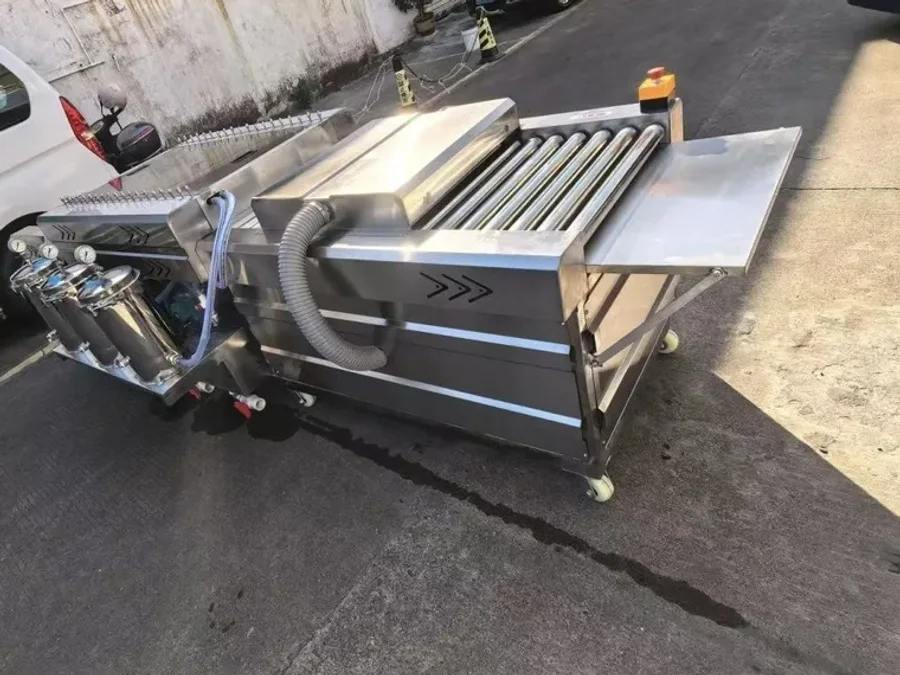
An industrial parts washing machine should be selected from the part, residue, output target, and drying requirement. The useful comparison is not only tank size or pressure, but whether the cleaning route fits the real production handoff.
Fast screen
Use this guide when these points are true
- Start from the residue: oil, chips, wax, dust, water marks, or mixed process carry-over.
- Confirm whether parts can feed flat through a conveyor or need a more flexible route.
- Define the next process: coating, assembly, packing, inspection, storage, or export shipment.
- Ask for a recommendation around output, drying target, utilities, and factory layout.
Buyer intent
Buyer comparing automatic parts washing equipment before sending a factory inquiry or RFQ.
This page should move the buyer from a broad keyword to a clearer machine route, then into the matching product, application, or quote path.
Match the machine to the part family first
Flat sheets, glass panels, acrylic boards, hardware tools, and machined parts do not need the same contact route. A strong buying process starts by separating the material and feeding behavior before comparing price.
- Flat metal parts usually need stable brush contact and one-pass drying.
- Glass and acrylic panels need surface-risk control and careful drying.
- Heavy-oil metal parts may need rough washing separated from final rinsing.
Use residue type to narrow the route
The same part can require different equipment if the residue changes. Light handling dust is different from oil, coolant, polishing compound, metal chips, or wax.
- Oil and chips usually push the project toward stronger washing and filtration.
- Water marks usually require better water handling and drying control.
- Dust before printing, lamination, or packing needs surface-risk checks.
Do not ask price before the quote inputs are ready
A reliable quote needs part size, material, residue photos, daily output, voltage, water handling, and destination market. Without these inputs, the price comparison is usually misleading.
- Send photos or a short video of the current residue.
- Share the width, length, thickness, and daily output range.
- Confirm whether the target is pack-ready, coating-ready, or inspection-ready.
Specification table
Inputs that change the machine recommendation
For a useful quote
Send these details first
- Material and part photos
- Size range and thickness
- Residue type and current cleaning method
- Required output and next process
- Voltage, water supply, drainage, and destination country
What is the best industrial parts washing machine for a new project?
The best machine depends on the part family, residue, output target, and drying requirement. Flat sheets, glass panels, hardware parts, and heavy-oil metal parts should not be quoted from one generic machine model.
What information should be sent before asking for price?
Send material, photos, size range, thickness, residue type, current cleaning method, daily output, voltage, drainage, and the next process after cleaning.