 Industrial Cleaning & Drying Systems


Comparison guide
Aluminum plate cleaning machine vs flat hardware tool cleaning machine
Choose an aluminum plate machine for continuous sheets where width and surface finish matter. Choose a flat-hardware machine for smaller individual parts where feeding, residue, and drying matter most.
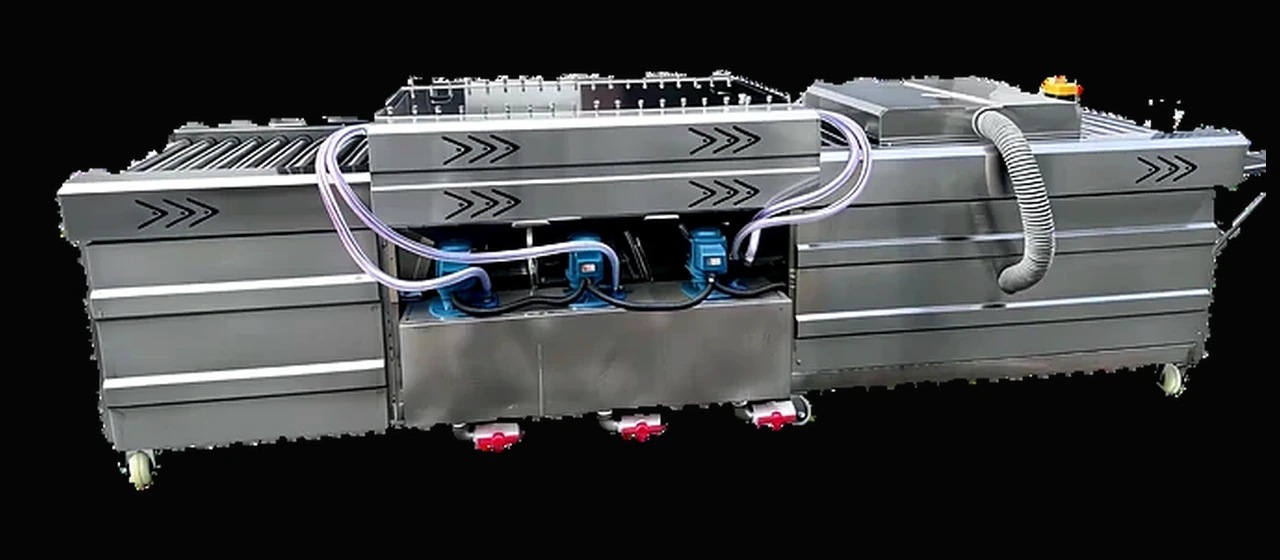
Key differences
Choose by workpiece format and handling
Compare the shape and size of the workpiece, how it is fed, the surface result you need, and the next production step. Metal type alone does not decide the machine.
Sheet-cleaning machine
Aluminum plate cleaning for wide sheets and surface finish
Best for continuous sheets or plates where width, surface finish, and conveyor cleaning are important before coating, lamination, storage, or packing.
A good choice when
- Aluminum sheets, stainless steel plates, and similar broad flat workpieces that behave like a sheet line instead of discrete parts
- Projects where sheet width, finish sensitivity, and coating or lamination preparation are more important than individual part variation
- Projects that need reliable cleaning and drying before packing, film application, storage, or the next surface-preparation step
Please check first if
- Choose a different machine if the workpieces are smaller parts that drift, stack, or need individual support
- Check the actual parts when the job is described as plate or sheet but includes blades, tools, or hardware accessories
- Account for part spacing, conveying support, and internal drainage rather than sizing by conveyor width alone
Flat-hardware machine
Flat hardware tool cleaning for smaller metal parts and batch drying
Best for smaller, individual flat metal parts when thickness, oil or wax, feeding stability, and drying matter more than sheet width and surface preparation.
A good choice when
- Saw blades, knives, scissors, flat tools, and similar metal parts that run as individual workpieces instead of as true sheets
- Projects where oil, wax, polishing residue, or storage-prep drying matter more than sheet-finish preparation for coating or lamination
- Projects that need compact cleaning for flat hardware before packing, storage, or assembly
Please check first if
- Choose a sheet machine if the job is a width-driven process with large plates for coating or lamination
- Still review the hardest real part because holes, teeth, sharp edges, or feeding drift can change the machine choice even when the parts look broadly flat
- Specify dedicated sheet washers when surface finish, non-marking pinch rollers, and wide sheet spans are essential
What to compare
Conditions that change the machine choice
Best for plates or sheets that move through the line as continuous flat workpieces.
Best for smaller, individual hardware parts that need stable handling.
Width, finish sensitivity, and preparation for coating or lamination drive the recommendation.
Thickness, oil or wax load, feeding stability, and drying requirements drive the recommendation.
Best when sheets move through a stable conveyor process.
Best when individual parts, sharp edges, spacing, drift, or stacking affect handling.
Best before coating, lamination, film application, sheet packing, or another surface-preparation step.
Best before packing, storage, or assembly for smaller flat hardware.
A sheet machine may not fit workpieces that are actually smaller parts with handling and drying challenges.
A flat-hardware machine may not fit a wide-sheet line with strict width and finish requirements.
Recommended machine
Choose the machine that matches your workpieces
This fits when comparison to identify the better machine type, then send us your workpiece details for a configuration and quote.
Choose this machine when the workpieces are continuous sheets and surface-safe cleaning is needed before coating, lamination, packing, or storage.
View sheet-cleaning machine Flat-hardware option Choose flat-hardware cleaning for individual partsChoose this machine when smaller parts, stable feeding, residue load, and drying matter more than sheet width.
View flat-hardware machineBefore requesting a quote
Details to send us
- Photos or video of the real workpiece family, including the largest sheet or the hardest discrete part that actually decides fit
- Material, width, length, thickness, surface finish, and whether the workpieces are sheets or individual parts
- Current residue and reject pattern: oil, wax, dust, polishing residue, water marks, drift, stacking, or drying inconsistency
- Next production step after cleaning: coating, lamination, storage, packing, or assembly
- Target output, voltage, floor space, drainage, and whether you can provide a sample
Please check first
When you may need a different solution
- Use the one-tank versus two-tank guide if that is your main question
- Distinguish between aluminum plates and stamped hardware: soft alloys require non-marking roller materials and calibrated air knives
- Base equipment selection on the most demanding production workpiece rather than pristine benchmark samples
Related guides
Explore applications and cleaning problems
See these pages for application details, common cleaning problems, and machine testing information.
This guide when wide sheets are cleaned before coating or lamination.
Open aluminum sheet application Application guide Flat metal parts oil removalThis guide when you clean blades, tools, or other smaller flat parts.
Open flat metal parts application Cleaning problem guide Cleaning before packing flat partsThis guide when final drying, storage, or packing cleanliness is the main concern.
Open before-packing problem guide Machine testing See testing and delivery supportSee how machines are tested, prepared for shipment, and supported for delivery.
View testing detailsCommon questions
Questions to settle before you request a machine recommendation
The final setup depends on your part, residue, output target, utilities, and required result.
Can I choose a machine from this comparison alone?
This page compares Sheet-cleaning machine and Flat-hardware machine. The final choice still depends on your part, residue, output target, utilities, and required finish.
What should I send before asking which option is right?
Prepare the facts that usually change the choice first: Photos or video of the real workpiece family, including the largest sheet or the hardest discrete part that actually decides fit Material, width, length, thickness, surface finish, and whether the workpieces are sheets or individual parts Current residue and reject pattern: oil, wax, dust, polishing residue, water marks, drift, stacking, or drying inconsistency Next production step after cleaning: coating, lamination, storage, packing, or assembly
When should I ask for a technical check first?
Please ask us to check first if any of these apply: Use the one-tank versus two-tank guide if that is your main question Distinguish between aluminum plates and stamped hardware: soft alloys require non-marking roller materials and calibrated air knives Base equipment selection on the most demanding production workpiece rather than pristine benchmark samples
