 Industrial Cleaning & Drying Systems


Comparison guide
Flat hardware tool cleaning machine vs filter hardware cleaning machine
Choose the flat-hardware machine for open, stable parts that feed and drain easily. Choose the filter-hardware machine when holes, mesh, recesses, or sensitive surfaces make cleaning and drying less predictable.
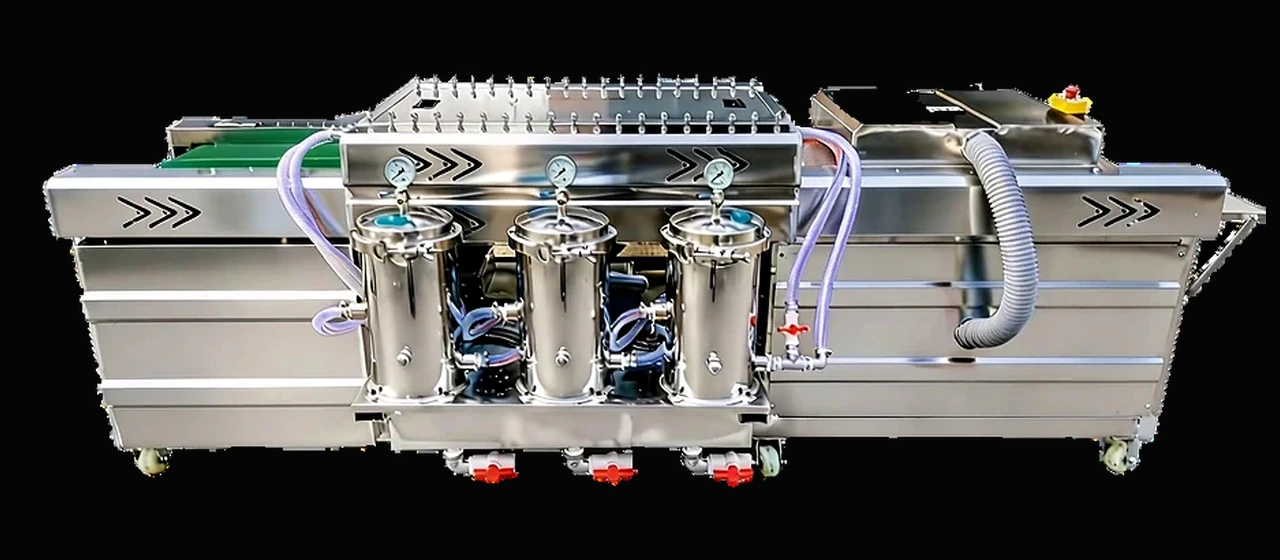
Key differences
Choose by part shape and drying behavior
Part shape matters more than a broad material label. Check drainage, contact tolerance, hidden areas, and the finish you need after drying.
Flat-hardware machine
Flat hardware tool cleaning for stable and easy-to-dry parts
Best for flat, open parts that feed steadily, tolerate normal contact, and do not retain liquid or residue.
A good choice when
- Stamped, cut, or flat hardware parts with open surfaces and stable feeding behavior
- Part families where holes, recesses, or irregular edges do not create hidden residue or retained-water problems
- Projects that need clean, dry parts for the next process or packing
Please check first if
- Perforated, meshed, or recessed parts require dedicated drainage evaluation even if their overall profile appears flat
- Use caution when cosmetic faces, burr-sensitive edges, or light deformation risk make brush-contact tolerance tighter than the top view suggests
- Check the hardest part in the family, not only the easiest sample
Filter-hardware machine
Filter hardware cleaning for irregular, perforated, or trap-prone parts
Best when holes, mesh, recesses, awkward edges, or water traps make part support, cleaning reach, and drying more demanding.
A good choice when
- Filter hardware, perforated sheets, mesh, or irregular parts where geometry changes how residue is removed and how water leaves the part
- Projects where brush-contact strategy and part support need review because surfaces, edges, or formed areas are less tolerant
- Projects that must confirm dry, clean output on the hardest geometry
Please check first if
- Standard flat-part conveyor washers remain the most cost-effective solution if workpieces drain freely and dry easily
- Send the hardest part; width and thickness alone do not show the real handling risk
- Evaluate thin-wall deformation risks, cosmetic scratch sensitivity, and liquid-trap geometry alongside oil removal needs
What to compare
Conditions that change the machine choice
Better when the family stays mostly flat and open, without mesh, hidden recesses, or edges that change how residue reaches the part.
Better when holes, mesh, recesses, irregular edges, or formed areas change cleaning access and make the hardest geometry the real review target.
Safer when the surface and shape can accept straightforward contact without turning cosmetic sensitivity or light deformation into the main risk.
Safer when brush strategy, part support, or contact control needs closer review because surfaces, edges, or shapes are less forgiving.
Works best when water drains cleanly and your team is not fighting trapped moisture before packing or the next process.
Worth review first when holes, overlap zones, or liquid traps make retained moisture and difficult drying the real bottleneck.
Strong when residue is on accessible faces and flat edges instead of hidden geometry that changes the wash path.
Stronger when key contamination sits around perforations, inner edges, recesses, or hard-to-reach areas that flatter options understate.
A good fit when the test part represents the most difficult shape in the family.
A better fit when one easy sample does not represent the family because shapes vary too much.
Recommended machine
Choose the machine for the hardest real part
Use the product pages below to compare the two machine types, then send us part details for a suitable configuration.
Choose this machine when the hardest part is flat, easy to drain, and can be cleaned and dried without geometry-specific handling.
View flat-hardware machine Filter-hardware option Choose filter-hardware cleaning for complex shapesChoose this machine when holes, mesh, recesses, irregular edges, or retained water change how parts must be cleaned and dried.
View filter-hardware machineBefore requesting a quote
Details to send us
- Part photos from multiple angles, including the hardest geometry in the family rather than only the cleanest flat sample
- Thickness range, widest part, and whether feeding stability changes across the part family
- Hole, mesh, recess, overlap, or liquid-trap details that affect residue reach and retained water
- Deformation tolerance, cosmetic-surface standard, and whether brush contact is restricted on key faces or edges
- Residue location, hard-to-reach areas, and whether oil, chips, or particles remain around perforations or recesses
- Required drying standard before packing, lamination, assembly, coating, or the next visible surface process
Please check first
When you may need a different solution
- Verify blind holes, internal cavities, and cosmetic tolerances before assuming parts can run on standard flat conveyor rollers
- Internal geometry, water pockets, and drying airflow dictate machine sizing far more than conveyor width alone
- Verify process capability across your entire parts family, specifically validating components with deep recesses or blind holes
Related guides
Explore the application or cleaning issue
See these pages for part-specific guidance, common cleaning issues, and machine testing information.
Read this guide when you are cleaning flat metal parts and need to confirm residue removal and drying requirements.
Open flat metal parts application Cleaning problem guide Cleaning before packing flat partsRead this guide when retained moisture or the final dry condition before packing is the main concern.
Open before-packing problem guide Cleaning problem guide Heavy oil removal from metal partsRead this guide when oil load, chips, or mixed contamination may be causing the cleaning issue.
Open heavy oil problem guide Machine testing See testing and delivery supportSee how machines are tested, prepared for shipment, and supported for delivery.
View testing detailsCommon questions
Questions to settle before you request a machine recommendation
The final setup depends on your part, residue, output target, utilities, and required result.
Can I choose a machine from this comparison alone?
This page compares Flat-hardware machine and Filter-hardware machine. The final choice still depends on your part, residue, output target, utilities, and required finish.
What should I send before asking which option is right?
Prepare the facts that usually change the choice first: Part photos from multiple angles, including the hardest geometry in the family rather than only the cleanest flat sample Thickness range, widest part, and whether feeding stability changes across the part family Hole, mesh, recess, overlap, or liquid-trap details that affect residue reach and retained water Deformation tolerance, cosmetic-surface standard, and whether brush contact is restricted on key faces or edges
When should I ask for a technical check first?
Please ask us to check first if any of these apply: Verify blind holes, internal cavities, and cosmetic tolerances before assuming parts can run on standard flat conveyor rollers Internal geometry, water pockets, and drying airflow dictate machine sizing far more than conveyor width alone Verify process capability across your entire parts family, specifically validating components with deep recesses or blind holes
